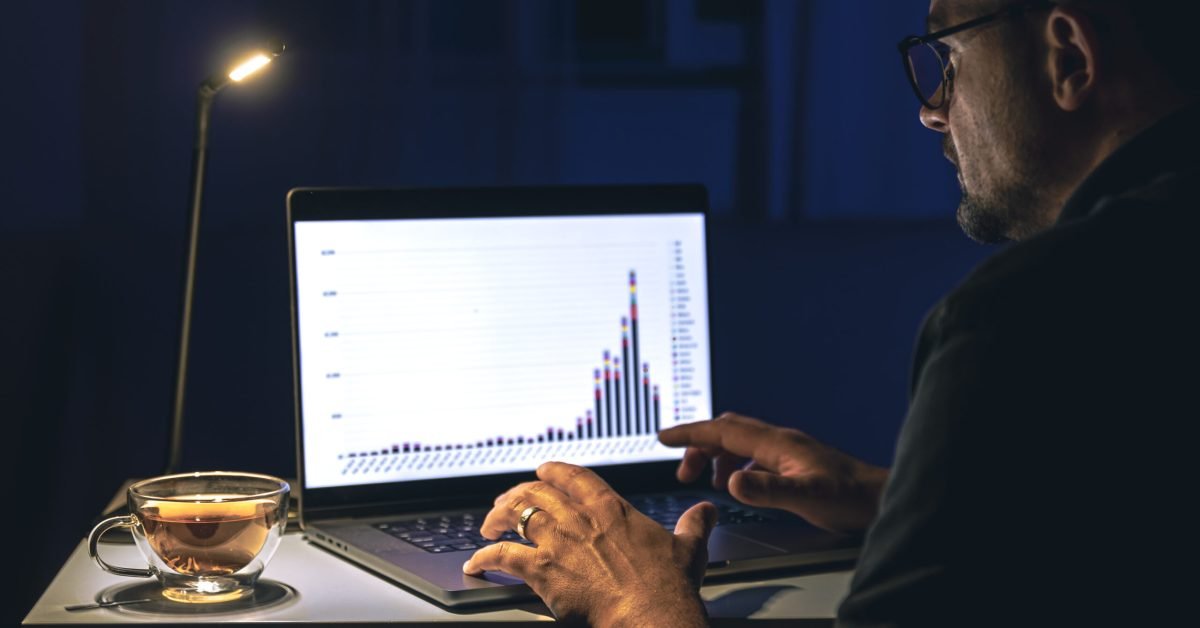
Have You Ever Stared at a Dashboard and Still Had No Idea What to Do Next?
Most businesses collect data, but very few actually use it well. Seeing numbers is not the same as understanding them. That gap is exactly where growth gets lost. Reporting tells you what happened. Performance analytics tells you why and what to do next. Without both, you are just guessing. At Rise Forge Media, we help businesses turn data into real decisions. This guide breaks down how to use performance analytics and optimization together and get the most out of your numbers.
What Is Performance Analytics?
What is performance analytics? It is the process of collecting, analyzing, and visualizing data such as KPIs, ROI, and operational metrics to evaluate and improve organizational efficiency. Performance analytics drives data-backed decisions, identifies bottlenecks, and tracks trends over time to optimize business, marketing, HR, and sales performance.
Digital performance analytics goes one step further by applying these same principles to online channels, helping businesses understand exactly how their websites, campaigns, and content are performing in real time.
Why Performance Analytics Is Important for Business Owners
Performance analytics helps businesses track how well they are doing at every level. It shows a clear picture of what is affecting results. When you understand what is driving your numbers, you can take the right steps to improve how your business runs.
How performance analytics helps identify improvement opportunities is straightforward. It surfaces the exact areas where your business is underperforming so you can fix them before they become expensive problems. Without this visibility, most businesses are reacting to problems after they have already caused damage.
How Performance Analytics Works
Performance tracking analytics works by looking at key measures in your business. These measures show what is and is not working. Businesses can choose their own performance indicators to track. Others use indicators that are widely recognized across industries.
Small businesses often do well with simple performance tracking and analytics indicators. These are enough to show whether your strategies are delivering results. Larger businesses may need more advanced corporate performance analytics tools to measure performance across multiple departments and locations.
One example is the thousand-point strength index or TPSI. The TPSI is a detailed analytics tool that covers every part of a business. It looks at anything that could affect the future of an organization. Executives use these results to plan with confidence. The analysis also shows what steps are needed to hit future goals.
Benefits of Performance Analytics
Increasing Productivity
Performance analytics can identify areas where performance is falling short. In sales, it can spot teams that are consistently missing their numbers. Those teams can then be given the right training to improve. It becomes easy to see which individual or department is not hitting KPIs. Management can then decide the best course of action from there.
Enables Data-Driven Decisions
Performance analytics and optimization help businesses predict outcomes and diagnose problems early. This information is used to make better decisions going forward. It also helps organizations avoid repeating mistakes that have caused losses before. Every decision becomes based on real data rather than guesswork.
Enhanced Future Planning: Tracking performance data over time and it gives you a record of past events and how they were handled. That data helps you predict when similar situations might come up again. For example, historical data may show that overloading employees leads to people leaving. The business can then plan ahead and bring in extra help before that happens. This way, valuable employees are retained, and common mistakes are avoided.
What Challenges Should You Expect?
Five common problems come up when using performance analytics at work. Knowing them early helps you prepare before things go wrong.
Data Quality and Integration
Bad data is the biggest problem businesses deal with today. Data spread across different systems is very hard to manage. Set clear rules for how your data gets collected daily. Put one person in charge of keeping all data clean. This is especially important when using any performance analytics tool that pulls from multiple sources.
Analysis Paralysis
Tracking too many numbers makes things very hard to follow. Pick only a few metrics that actually matter to you. Only dig deeper when something in your numbers looks wrong. This helps your team stay focused on what truly matters and is one of the key considerations when choosing performance analytics tools.
Cultural Resistance
Some people think analytics is just a way to monitor them. Let your team help decide which numbers get tracked daily. Show them real examples of how data made their jobs easier. Help them see team performance analytics as support and not as judgment.
Bias and Misinterpretation
Data can give you the wrong idea very easily sometimes. Always check your numbers by looking at more than one source. Teach your team to ask questions before making any decision. Never let just one person decide based on data alone.
Privacy and Compliance
Performance analytics tools now collect a lot of personal data from everyone. You must always follow privacy laws like GDPR and CCPA. Think about privacy right from the very start of setup. Make sure people know their data is being used and that they agree to it.
What Are the Different Types of Performance Analytics?
There are six main types of performance analytics. These are business, marketing, HR, sales, operational, and product analytics. The type you use depends on your industry and goals. It also depends on what questions your business needs to answer.
Business Performance Analytics
Corporate performance analytics checks how healthy your business is overall. It tracks financial and operational numbers in one place. This is the widest category of all six types. It is mostly used by executives and senior teams. Key numbers include revenue growth, profit margins, and customer value. Tools like Power BI, Tableau, and Salesforce are commonly used here.
Marketing Performance Analytics
Marketing performance analytics show how well your campaigns are doing. It covers paid, owned, and earned channels all at once. It helps you see which marketing efforts are bringing in money. Social media managers track success or failure based on which type of analytics they are using, and this category covers those metrics directly. Key numbers include acquisition cost, ROAS, and conversion rates. Tracking has become harder due to recent privacy changes. Server-side tracking and AI tools help get accurate results now.
Employee and HR Performance Analytics
Employee performance analytics goes beyond simple performance reviews. It uses data to help manage people in a better way. It looks at workload, feedback, and collaboration patterns too. This helps find top performers and spot early signs of burnout. Key numbers include productivity, retention rates, and goal completion. Some tools can now predict who might leave the company soon.
Sales Performance Analytics
Sales performance analytics helps improve pipeline speed and accuracy. It tracks win rate, deal size, and quota attainment. Good sales performance analytics do not just look at past results. They also track activity levels and engagement to predict outcomes. This helps teams act before the quarter is already over.
Operational Performance Analytics
Operational performance analytics helps your business run more smoothly. It cuts waste and keeps quality at a good level. Manufacturers track equipment performance, defect rates, and output. Service businesses track resolution time and cost per transaction. Real-time data helps catch problems before they get bigger. This saves time and avoids expensive downtime later on.
Product Performance Analytics
Product performance analytics shows how people use your product. It shows where users find value and where they stop. Companies track active users, feature use, and churn rate. Tools like Mixpanel, Amplitude, and Pendo give detailed usage data. These tools show the patterns behind why users stay or leave.
How to Integrate Performance Analytics Into Your Marketing Strategy
How to integrate performance analytics into marketing strategy is one of the most common questions business owners ask. The answer starts with connecting your data sources. Your website analytics, social media metrics, email performance, and ad spend all need to feed into one central place so you can see the full picture.
Once your data is connected, set clear goals for each channel. Define what success looks like in specific numbers. Then review your marketing performance analytics weekly to see what is working and what needs adjustment. Performance analytics and optimization are not a one-time setup. It is a continuous cycle of measuring, learning, and improving.
How to implement performance analytics across departments best practices involves getting every team aligned on the same metrics. Marketing, sales, and operations should all be looking at numbers that connect to the same business goals. When teams work from shared data, decisions get faster and better.
Key Factors to Consider When Choosing Performance Analytics Tools
Key factors to consider when choosing performance analytics tools come down to five things.
1. Know What You Need It For
Start by being clear about what problem you want to solve. Do you need a broad view for your whole business? Or do you need something specific for marketing performance analytics, HR, or product? How to choose the best performance analytics system for business always starts with defining the problem before evaluating any tool.
2. Check How Well It Connects
Your new performance analytics tool must work with the systems you already have. This includes your CRM, ERP, and any marketing or HR platforms. A tool that does not connect well will create more problems than it solves.
3. Make Sure It Can Grow With You
Pick a tool that handles your current data without slowing down. Your data will grow over time,so your tool needs to keep up. Choose something that works well now and scales with you later.
4. Look for Real-Time Data
In 2026 waiting for weekly data updates is not good enough. You need a performance analytics tool that refreshes your data in near real time. This way, your decisions are based on what is happening right now.
5. Think About Security and Access
Make sure the tool has strong security and access controls built in. Different team members should only see what they need to see. It should also meet data protection rules like GDPR and CCPA. This is especially important for businesses operating in the US performance analytics market, where compliance requirements are strict.
What Do Companies Track to Measure Performance?
What do companies track to measure performance? The most commonly tracked metrics fall into four categories.
Financial metrics include revenue growth, profit margins, cost per acquisition, and return on ad spend. These tell you whether your business is making or losing money on each activity.
Marketing metrics from marketing performance analytics include website traffic, conversion rates, email open rates, and cost per lead. These show which channels are bringing in customers most efficiently.
Sales metrics from sales performance analytics include win rate, average deal size, sales cycle length, and quota attainment. These show how effectively your team is converting opportunities into revenue.
Operational metrics include response times, error rates, fulfillment speed, and customer satisfaction scores. These show how efficiently your business is delivering on its promises.
How Rise Forge Media Helps
At Rise Forge Media, we help brands set up performance tracking and analytics systems that give them clarity and direction. If your data is sitting in dashboards that no one acts on, we help you change that.
Our performance analysis services cover everything from setting up your tracking infrastructure to building dashboards your team will actually use. We specialize in digital performance analytics for small and medium businesses that want to compete smarter without hiring a full-time data team.
Whether you need marketing performance analytics, sales performance analytics, or a complete business performance overview, we build systems that make your data work for you every single day.
Conclusion
Data is most useful when it turns into action.
Reporting tells you what is happening in your business. Performance analytics helps you understand why it happened and decide what to do next. When you manage both together, you stop reacting to problems after they develop and start recognizing them early to address them.
Organizations that are constantly growing are not the ones with the most data. They are the ones who understand what their numbers are saying and act on it.
At Rise Forge Media, we help brands set up performance tracking analytics and reporting systems that give them real clarity and direction. If your data is sitting in dashboards that no one acts on, let us help you change that.
Frequently Asked Questions
What is the difference between reporting and analytics?
Reporting shows you what happened in your business using charts, tables, and dashboards. Performance analytics goes deeper and helps you understand why it happened and what you should do next. Reporting is backward-looking. Analytics is forward-looking. Both are needed for good decision-making, and both work together inside a strong performance analytics and optimization system.
How do I know which metrics to track?
Start with the numbers that directly connect to your business goals. If your goal is more leads, track website traffic, conversion rate, and cost per lead. If your goal is better retention, track churn rate, repeat purchase rate, and customer satisfaction. How performance analytics helps identify improvement opportunities is by surfacing the gap between where you are and where you want to be. Pick three to five metrics per goal and review them consistently.
What tools should a small business use for performance analytics?
Small businesses do well starting with Google Analytics 4 for website data, a simple CRM for sales performance analytics, and a social media dashboard for marketing performance analytics. As you grow, tools like HubSpot, Databox, or Google Looker Studio help you combine data from multiple sources into one view. Key considerations when choosing performance analytics tools for small businesses always include ease of use, cost, and how well the tool connects with what you already have.
How often should I review my reports?
Weekly reviews work well for marketing performance analytics and sales performance analytics. Monthly reviews are appropriate for the bigger picture of business performance. Quarterly reviews help with strategic planning and goal setting. The key is consistency. Performance tracking analytics only deliver value when you review them regularly and act on what you find.
What is the most common analytics mistake businesses make?
The most common mistake is tracking too many metrics and acting on none of them. Businesses set up dashboards full of numbers but never build a habit of reviewing and responding to the data. How to implement performance analytics across departments, best practices always start with fewer metrics reviewed more consistently, rather than more metrics reviewed occasionally. Pick the numbers that matter most, review them on a schedule, and build a culture where data drives every decision.